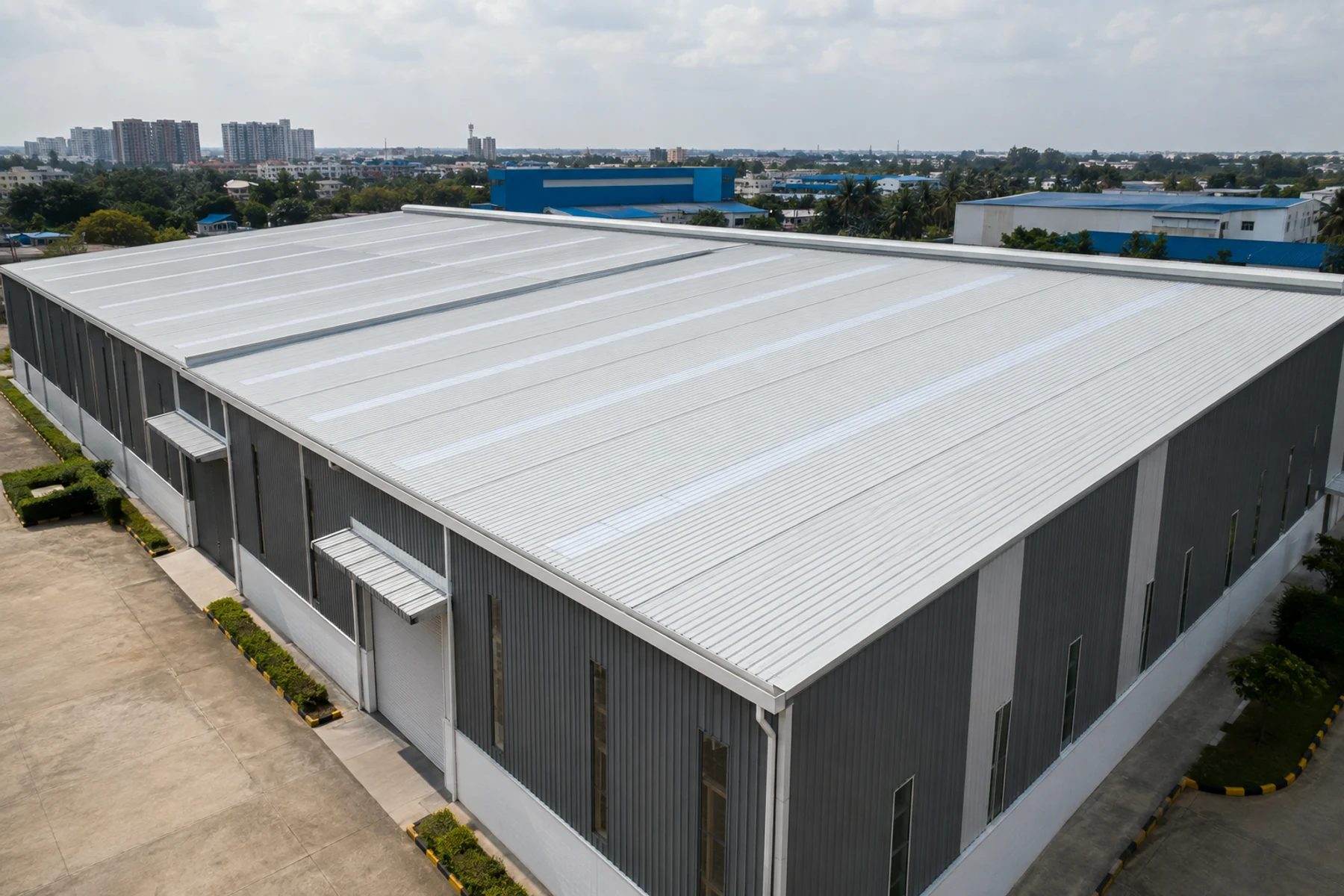
Post-Monsoon Roof Inspection Checklist for Indian Buildings

Once the main monsoon period has passed, a roof may look dry while still carrying useful evidence of blocked drainage, failed junctions, loose or damaged components, coating damage or water entry. A structured inspection helps a homeowner, facility team, contractor or project manager separate routine cleaning from repairs that need a roofing specialist or structural professional.
This guide is for condition recording and repair planning. It does not replace safe-access arrangements, a structural assessment, the selected manufacturer’s maintenance instructions or a project-specific work method. Do not walk on unsupported roofing, daylight sheets or an unfamiliar roof. Arrange competent access and keep people away from unsafe areas.
1. Start inside the building before going near the roof
Begin where the roof can be observed without exposure to a fall. Walk through rooms, ceiling voids and occupied areas that can be accessed safely. Record staining, peeling finishes, damp insulation, corrosion marks, damaged ceiling boards, musty areas and any places where water was seen during rain. Note whether the evidence appeared during wind-driven rain, after prolonged rain or only when an outlet overflowed.
Make a simple evidence map
Mark each observation on a plan or a rough sketch. Give every location a reference number and photograph it with a wider view and a close view. Record the date, the weather when the symptom appeared and the nearest roof feature above it. Water can travel along sheets, panels, purlins, ducts, cables or insulation before it becomes visible, so the internal stain is not automatically the roof defect directly above.
2. Preserve evidence before cleaning or sealing
Cleaning and emergency sealing can hide the route that water followed. Photograph debris lines, overflow marks, displaced components, open joints, damaged sealant, loose flashings and corrosion before the area is disturbed. If a temporary measure is required to protect the building, record what was applied, where it was applied and why.
Do not turn diagnosis into random patching
A surface patch may not correct a blocked water path, incompatible junction, moving joint, failed fastener pattern or damaged support. Use the recorded evidence to identify the roof zone and interface that need closer inspection. RoofMyWorld’s repair and maintenance service overview explains the difference between photo-based diagnosis, site review, repair and replacement planning.
3. Check the complete rainwater path
Post-monsoon inspection should follow water from the roof catchment to the final discharge point. From safe access, review valleys, box gutters, eaves gutters, outlets, downpipes, bends, junctions and the discharge or harvesting connection. Look for leaf build-up, silt, packaging, bird nesting material, displaced strainers, failed joints, loose brackets and marks showing that water has flowed over an edge.
Record capacity symptoms without guessing the cause
Overflow can result from blockage, poor fall, too few or poorly placed outlets, an unsuitable gutter section, a restricted downpipe or a catchment that was never checked against the local rainfall design basis. Material alone does not establish drainage capacity. A useful repair brief includes roof catchment dimensions, gutter-run lengths, outlet and downpipe locations, overflow points and the intended discharge route.
4. Inspect flashings, edges and penetrations as one system
Ridges, hips, verges, eaves, valleys, parapet junctions and changes in level often carry more detailing than the main roof surface. Check for movement, lifted edges, damaged closures, missing fasteners, failed seals, ponding evidence and incompatible past repairs. At ducts, pipes, ventilators, skylights, solar supports and cable entries, record both the penetration and the surrounding upslope water path.
Match every penetration to its base detail
A ventilator needs a base compatible with the ventilator throat and the existing roof profile. A service opening needs an approved support and weathering detail. Do not cut, enlarge or refix an opening until the coordinated detail is understood. A sealant bead alone is not proof that movement, laps and drainage have been resolved.
5. Use system-specific inspection points
Different roof families fail and move in different ways. Identify the actual product family, profile and support arrangement before selecting a cleaning method, replacement part or sealant. The RoofMyWorld product-family guide can help organise the first comparison, but the exact manufacturer and model still need confirmation.
Profiled metal roofing and wall cladding
From safe access, inspect side laps, end laps, cut edges, flashings, fasteners and sealing washers. Look for loose fixings, damaged washers, coating damage, trapped debris and drilling swarf that should have been removed after installation. Record corrosion without grinding, sanding or coating over it before its cause and extent are reviewed. Sheet thickness alone does not establish a safe support span.
If replacement sheets are being considered, confirm base metal and grade, coating, colour, profile, BMT or TCT thickness basis, effective cover width, cut lengths, support layout and fixing schedule. Review the colour-coated roofing sheet catalogue page for the specification fields that should be checked.
Insulated roof and wall panels
Inspect panel joints, ridge and eaves flashings, fasteners, penetrations and any areas where facing damage or failed seals are visible. Water inside a building may come from a weathering defect, an interface or condensation within an unsuitable build-up; the symptom alone does not identify the cause. Record the panel orientation, joint arrangement, core type and thickness where known, metal facings, support layout and affected zone.
uPVC roof profiles
Review fixings, sheet ends, ridges, gutters and edge details. Look for movement-related distortion, over-constrained areas, damaged sheets and unsupported edges without assuming a particular product limit. Confirm the manufacturer, layer construction, thickness, profile, effective cover, available lengths and the manufacturer-approved movement and support details before ordering a replacement.
Polycarbonate and FRP daylighting
Do not walk directly on unsupported daylight sheets. From an approved safe position, inspect joining profiles, edge seals, fasteners, support lines, drainage at multiwall ends and interfaces with the surrounding roof. Record cracking, discolouration, open channels, incompatible sealant or signs that the sheet has been installed or restrained incorrectly. Solid, multiwall, corrugated polycarbonate and profiled FRP are not interchangeable specifications.
Asphalt shingles and tiled roofs
Review valleys, flashings, ridges, hips, eaves and visibly damaged or displaced units from safe access. Asphalt shingles need a suitable continuous deck and coordinated underlay, starter, valley, ventilation and ridge details. Individual roof tiles rely on the selected model’s laid coverage, headlap, battens and fixing system. Match any replacement to the exact product rather than selecting by colour alone.
6. Check supports and the underside without making structural assumptions
Where the underside can be accessed safely, look for corrosion, distortion, displaced members, water marks, damp insulation, damaged liners and altered openings. Purlins are structural members: section, span, spacing, bracing and connections come from the project design. A roof-area figure, a new sheet thickness or a photograph cannot confirm that an existing support system is adequate.
Escalate unusual movement or damage
Sagging, widespread corrosion, loose connections, cracked supporting construction, storm damage or an unsafe access condition should be isolated and referred to the appropriate competent professional. If existing sheets are suspected to contain asbestos-cement, do not cut, drill, sand, pressure-clean or otherwise disturb them. Arrange specialist identification and handling under the applicable local requirements.
7. Separate maintenance, repair and replacement decisions
Use the inspection record to sort findings into clear actions. Routine maintenance may include clearing accessible drainage routes using an approved method. A local repair may involve a confirmed compatible flashing, fastener, washer, seal or damaged component. Replacement becomes a separate decision when defects are repeated, materials cannot be matched, the support or roof geometry has changed, or the complete interface cannot be restored reliably.
A repair scope should name the cause being addressed
For each action, state the observed symptom, likely water path, component, proposed repair, material compatibility, access requirement and verification method. Keep uncertain findings marked for investigation. Do not let a quotation convert an unverified cause into a confident claim.
8. Build a quotation-ready repair brief
A useful brief includes the site location, building use, roof family, approximate age if documented, plans or roof-zone sketch, safely taken photographs, internal evidence, drainage layout, access restrictions and the required outcome. State whether the request is for inspection, supply only, fabrication, installation, maintenance or a combined scope.
Measure the affected roof faces and details
For profiled sheets or panels, use the actual roof-slope length and the selected product’s effective cover after the joint or side lap. Count flashings, closures, fasteners, gutters, outlets and downpipes separately. The roofing material calculator can support an early area estimate, but final quantities must be checked against the profile, laps, cut lengths, layout, accessories and site conditions.
9. Use this post-monsoon roof inspection checklist
- Safety: Isolate unsafe areas and arrange competent access; do not walk on unsupported or unfamiliar roofing.
- Interior evidence: Map stains, damp insulation, corrosion marks and the timing of each symptom.
- Photographs: Capture wide and close views before cleaning, sealing or moving debris.
- Drainage: Check valleys, gutters, outlets, downpipes, overflow evidence and final discharge routes.
- Junctions: Review ridges, hips, verges, eaves, parapets, walls and changes in roof level.
- Penetrations: Record skylights, ventilators, ducts, pipes, solar supports and cable entries with their base details.
- Roof covering: Use the system-specific checks for metal sheets, panels, uPVC, daylighting, shingles or tiles.
- Supports: Record corrosion, distortion, altered openings and loose connections for professional review.
- Repair triage: Separate routine maintenance, confirmed local repairs, further investigation and replacement options.
- Brief: Add drawings, dimensions, access limits, photographs, required scope and responsibility for verification.
- Handover: Agree how the repaired zone, drainage path and interior evidence will be checked after completion.
10. Compare repair quotations on the same scope
Displayed prices are indicative family guidance only. Exact specification, thickness, quantity, GST, freight, fabrication and installation affect quotations. Repair pricing can also change with safe access, lifting, dismantling, disposal, temporary protection, hidden conditions, drainage work and the need to match discontinued materials.
Ask each quotation to identify the roof zone, materials, accessories, preparation, access, exclusions and the method used to verify completion. Comparing the same scope is more useful than comparing one material rate. For coordinated supply, repair or installation, review RoofMyWorld’s roofing services.
Frequently asked questions
When should a post-monsoon roof inspection be arranged?
Arrange it when the main rain period has passed and the roof can be assessed under an approved safe-access plan. Inspect sooner if there is active water entry, storm damage, an unsafe component or a blocked drainage route that could affect people, equipment or interiors.
Can I find a roof leak by looking directly above the ceiling stain?
Not reliably. Water can move along roof components and services before appearing inside. Map the internal evidence, weather conditions and nearby roof interfaces, then trace the water path from safe access.
Should gutters be pressure-cleaned after the monsoon?
Use the maintenance method approved for the gutter and adjacent roof materials. Pressure cleaning can be unsuitable for some assemblies and must not be used on suspected asbestos-cement. Safe access, controlled debris removal and an unobstructed discharge route matter more than one generic cleaning method.
Can loose roofing screws simply be tightened?
The correct action depends on the cladding, support, screw, washer, hole condition and approved fixing method. Over-compressing a sealing washer or refixing into a damaged hole can create another defect. Confirm the compatible fastener and repair detail.
How do I know whether to repair or replace the roof?
Use the extent and repetition of defects, material compatibility, support condition, roof geometry, drainage and the ability to restore complete interfaces. A site-specific assessment is needed when the cause is uncertain, damage is widespread or structural conditions are involved.
What should I send for a roof inspection quotation?
Send the site location, building use, roof-zone sketch or drawings, safely taken photographs, dimensions, drainage layout, internal evidence, access restrictions and whether you need inspection, supply, repair or installation support.
Turn the inspection into a clear next step
Share the roof type, building location, photographs, affected zones, drainage layout and the symptoms recorded during rain. Request a checked roof repair or maintenance discussion, WhatsApp +91 95919 41186, or email sales@roofmyworld.com.