
Material selection
Compare metal sheets, PUF panels, shingles, uPVC and daylight roofing by building use—not sheet price alone.
- Weather and corrosion exposure
- Thermal and daylight priorities
- Roof slope, span and finish
Roofing products, fabrication and installation across Karnataka
ROOFING LEARNING CENTRE
Clear, practical roofing primers for homeowners, architects, contractors and project teams in Bengaluru and Karnataka.
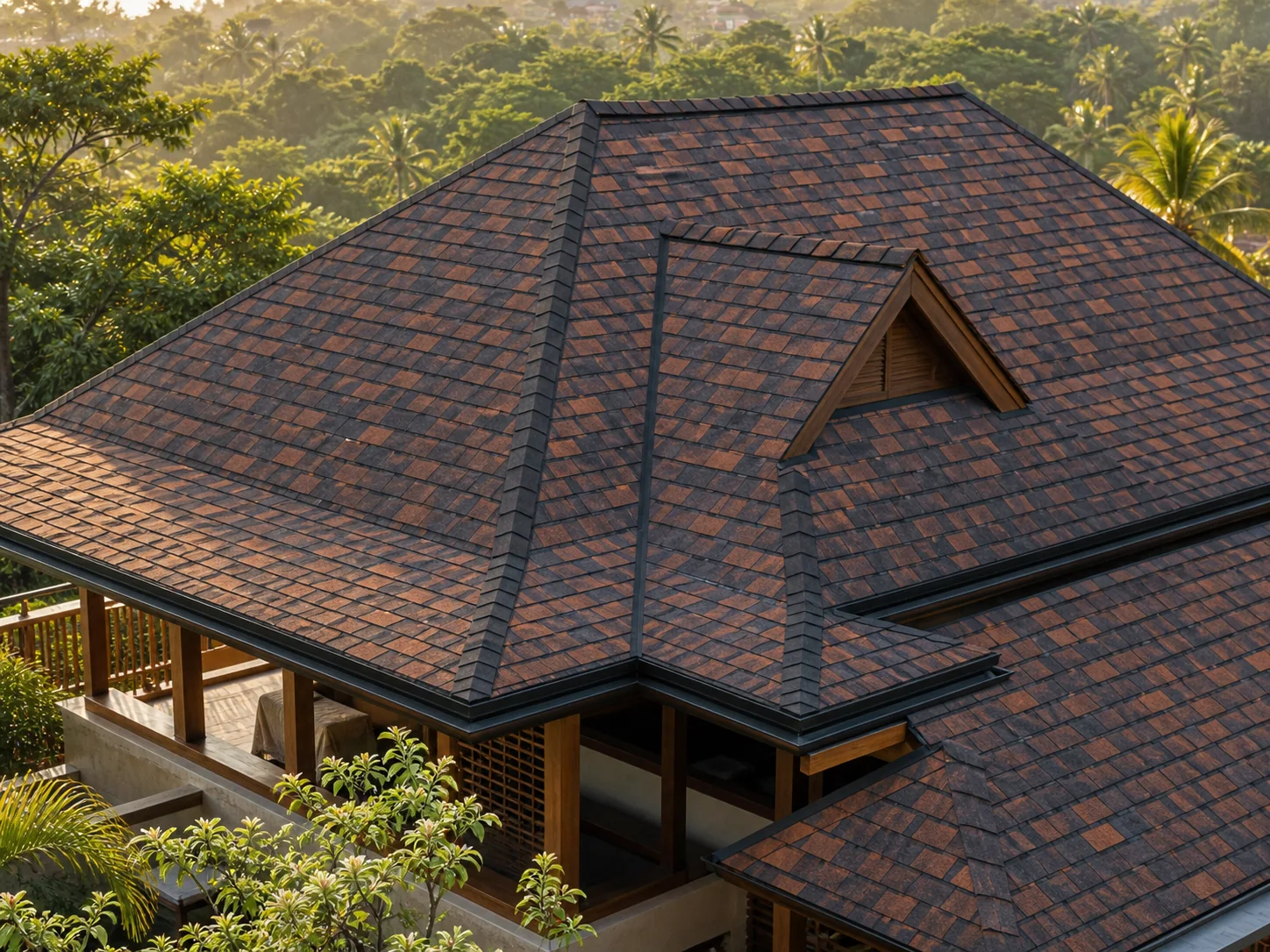
START WITH THE RIGHT QUESTIONS
Use these primers to prepare a more useful conversation. Product-specific technical values must still be checked against the current manufacturer literature and quotation.
Compare metal sheets, PUF panels, shingles, uPVC and daylight roofing by building use—not sheet price alone.
The dimensions, drawings, photos and site details that make a roofing estimate more useful.
Questions to ask when indoor temperature, condensation and energy performance matter.
Document symptoms systematically before requesting a roof-repair inspection.
Flashings, gutters, fasteners, sealants and tapes belong in the first material conversation.
Access, storage, sequencing and safety considerations before roofing materials reach site.
HOW TO MEASURE ROOFING AREA
For a simple roof face, multiply the actual sloping length by its width. Add all roof or wall surfaces, then allow for laps, cuts and site waste. Complex roofs should be divided into measurable rectangles or triangles and verified from drawings.
Choose a product and calculate areaUse feet for length and width. For pitched roofs, measure or derive the slope length.
Subtract large openings only when the product and installation method justify it.
Use 5–10% for simple surfaces and more for hips, valleys, angles and intricate cuts.
Effective cover width, lap direction, stock length and flashing details affect the final order.
CHECK THE REQUIREMENT BEFORE ORDERING
The estimator provides a planning figure. A specialist can verify the product configuration, cut plan and complete roof requirement.
 Ask Roof MasterProducts · area · installation