Polycarbonate roofing: design daylight without creating a heat or leak problem
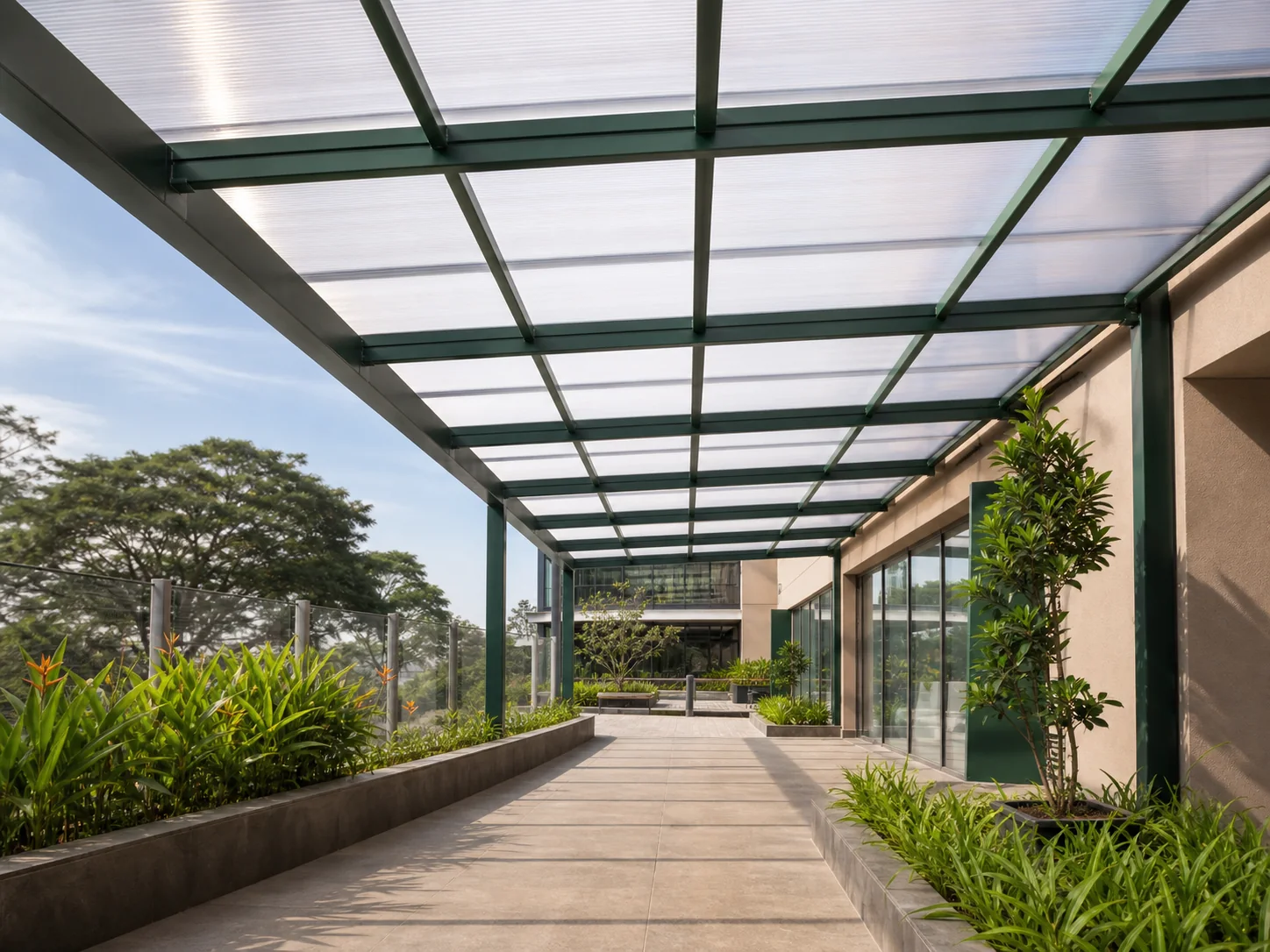
How sheet type, support, expansion, orientation and compatible accessories shape a successful daylighting roof.
Choose the sheet around the space below
Solid, corrugated, embossed, multiwall and standing-seam polycarbonate products create different balances of transparency, diffusion, stiffness and thermal behaviour. A bright canopy may favour visual clarity, while an occupied workspace often benefits from diffused light and controlled solar gain.
- Required light transmission and glare control
- Clear span and support direction
- Curved or flat geometry
- Impact, weather and UV exposure
- Thermal comfort beneath the roof
- Connection to adjoining opaque roofing
Thermal movement must be designed in
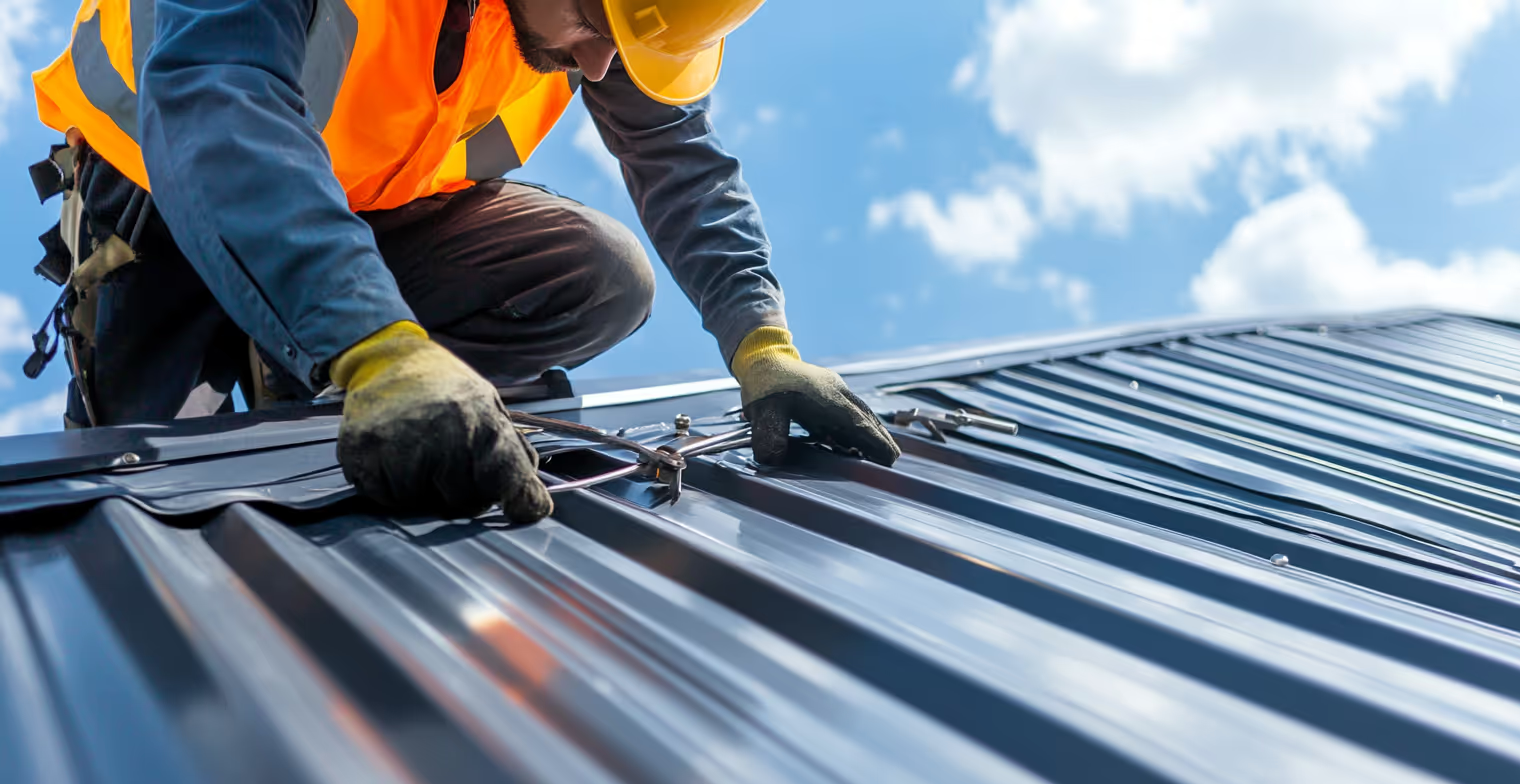
Polycarbonate expands and contracts more visibly than many metal roof components. Fixing holes, glazing bars, end clearances and sheet lengths must allow movement without losing weather tightness. Over-tightened fasteners, rigid sealant joints or insufficient clearance can cause buckling, cracking and leakage.
Protect the correct face and the open cells
Where a sheet has a UV-protected face, it must be installed outward. Multiwall flutes are generally oriented to drain; their ends use specified sealing or breathable tapes and closure profiles so dust, insects and condensation do not become trapped.
Use compatible accessories
Gaskets, washers, tapes, sealants and cleaners must be compatible with the selected sheet. Avoid unapproved solvents and direct foot traffic. Support spacing, thickness and wind loading should be checked for the exact product, and adjoining profiles must be coordinated so laps drain correctly.
Prepared by the RoofMyWorld Editorial Team and technically reviewed using ReZa Smart Build product, fabrication and installation knowledge.