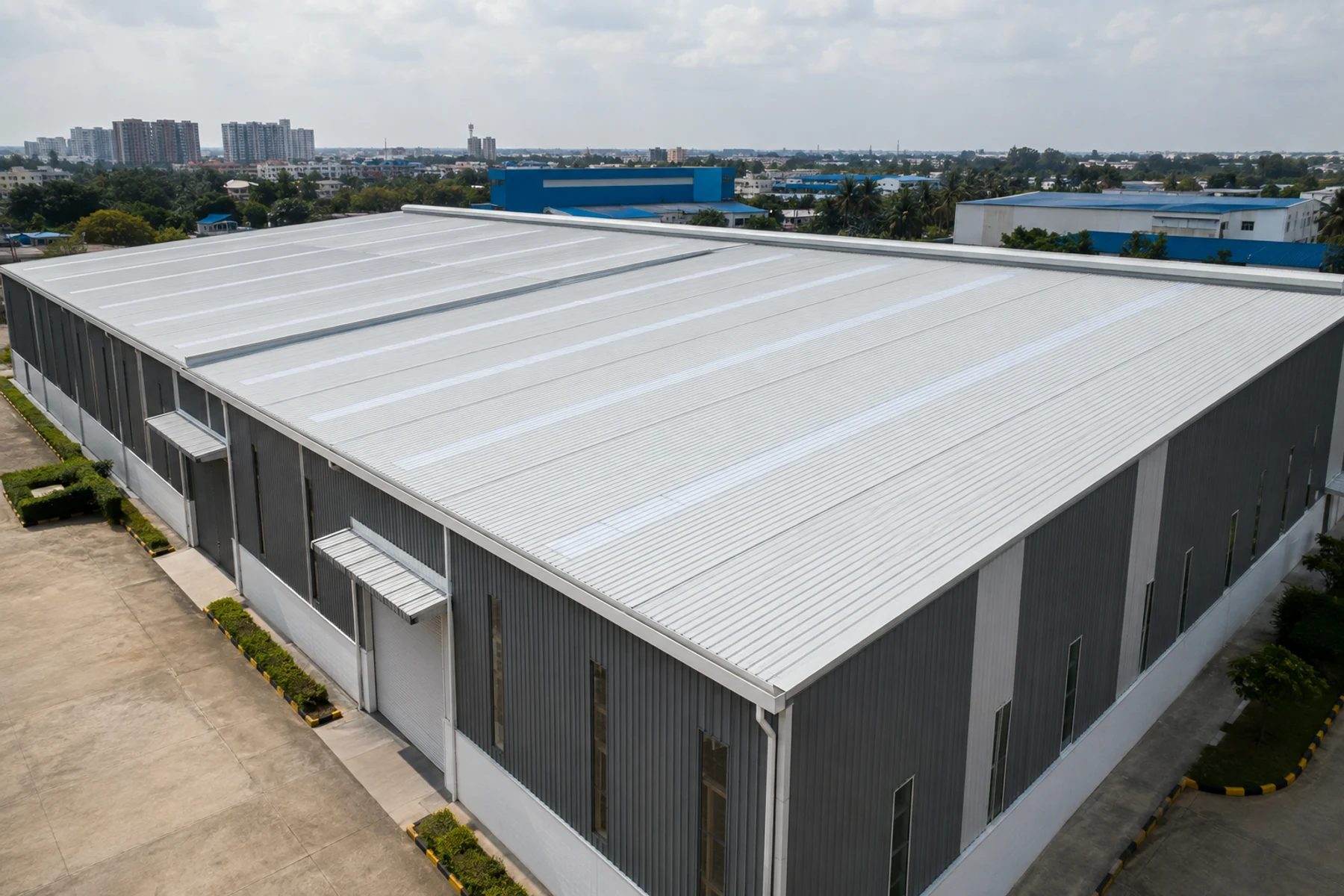
Full-Stack Roofing: What It Means & Why Your Factory Needs It
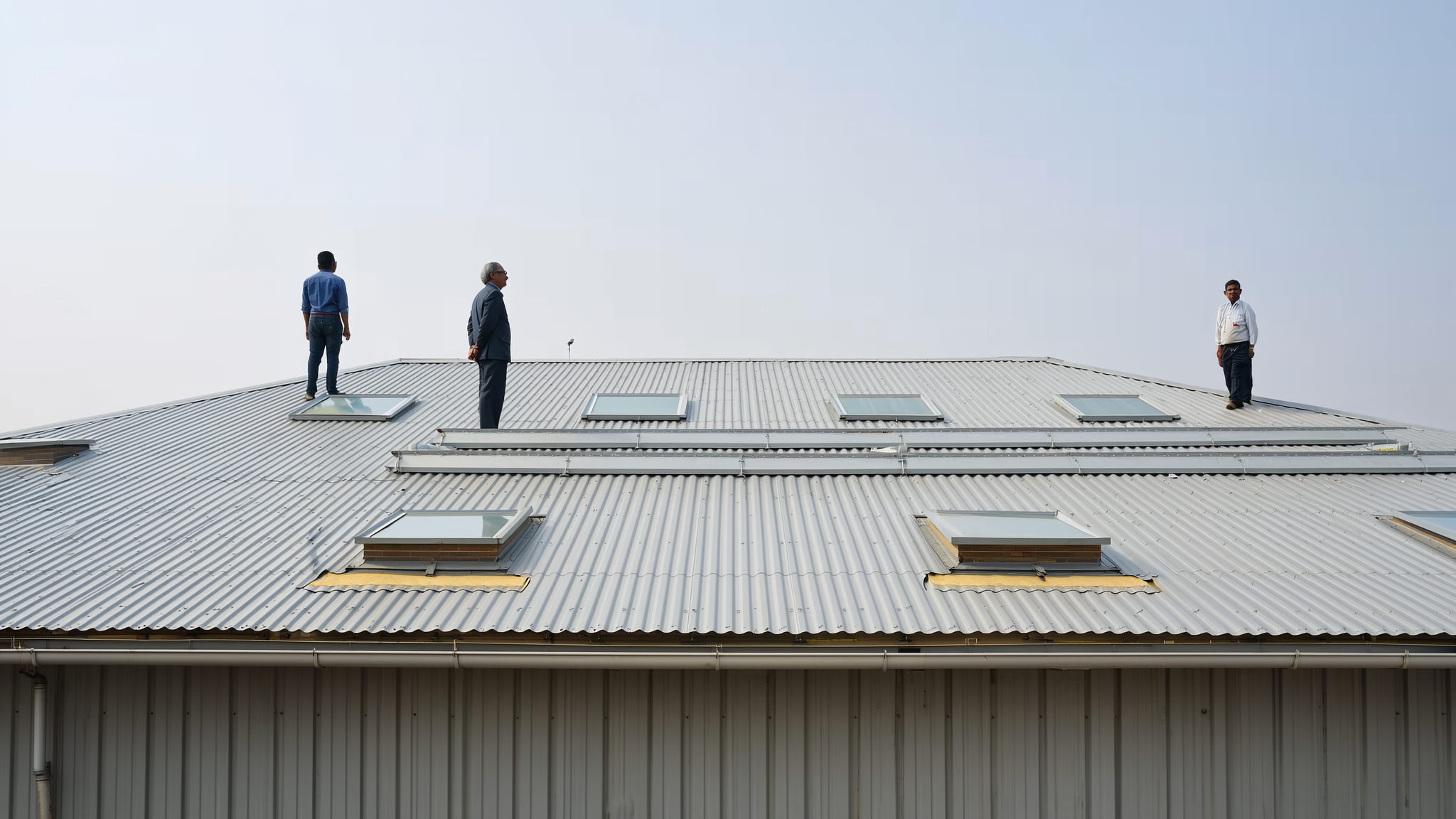
The term "full-stack roofing" gets used a lot these days, but I've noticed most facility managers don't actually understand what it means – or more importantly, why it matters for factory operations.
Let me clarify: full-stack roofing refers to an integrated service model where a single provider manages every phase from design through 25-year lifecycle support, rather than fragmented sourcing (different vendors for design, materials, installation, and maintenance).
For factory facilities specifically, this model delivers significant operational and financial advantages.
The Fragmented Roofing Problem
Most factory roofing projects follow this fragmented model:
- Design phase: Consultant or in-house engineer specifies materials
- Material procurement: Purchasing department sources lowest-cost suppliers
- Installation: General contractor or independent installation crew
- Maintenance: Building management or separate maintenance vendor
- Problem resolution: Warranty disputes and finger-pointing when issues emerge
This fragmentation creates systemic problems:
- Design specifications don't align with material sourcing (material isn't what engineer specified)
- Installation quality varies (different crews, no continuity)
- Accountability dispersed (who's responsible when roof leaks 5 years post-installation?)
- Warranty administration unclear (vendor disputes, coverage gaps)
- Maintenance protocols inconsistent (multiple vendors, no standardization)
Financial impact: 15-25% cost overruns typical in fragmented models due to coordination failures, rework, and warranty disputes.
Full-Stack Model: Integrated Accountability
Full-stack roofing reverses this structure:
Single provider owns: Design → Material selection → Installation → Quality verification → 25-year maintenance and support
Accountability structure: - Design accountability (performance specifications backed by lifetime warranty) - Material quality accountability (direct sourcing, quality assurance) - Installation accountability (certified crews, quality inspections) - Performance accountability (warranty covers entire system performance, not individual components)
Why Factories Specifically Benefit
Factory facilities have specific requirements that benefit from full-stack integration:
1. Performance Criticality
Factory roof failure = production shutdown. Roof leak during monsoon can halt operations worth ₹10-20 lakhs/day in lost production. Full-stack providers have incentive to deliver zero-failure systems because they're accountable for performance consequences.
2. Environmental Stress
Industrial facilities experience thermal stress (furnaces, HVAC exhaust), chemical exposure (in some cases), and water/moisture challenges (process cooling systems) that require specific design considerations. Full-stack providers design roofs specifically for these industrial conditions, not generic commercial applications.
3. Longevity Requirements
Factories typically operate 25-30+ year timeframes (much longer than typical commercial leases). Full-stack providers design for true lifetime performance and maintain accountability across the entire period.
4. Maintenance Integration
Factory maintenance teams are often overextended. Full-stack providers manage maintenance schedules proactively, reducing burden on internal teams.
Full-Stack Roofing Implementation Framework
Phase 1: Design & Engineering (Weeks 1-4) - Structural load analysis - Thermal and acoustic modeling - Environmental condition assessment (humidity, temperature cycling, chemical exposure) - Water management system design - Maintenance accessibility planning
Phase 2: Material Integration (Weeks 5-8) - Specification of primary roofing system (typically Onduline for industrial facilities) - Complementary material specification (flashing, insulation, sealants) - Supplier coordination and quality verification - Bulk procurement at optimal pricing
Phase 3: Installation Excellence (Weeks 9-14) - Certified crew training and deployment - Real-time quality assurance (inspections, testing) - Performance verification (water testing, thermal imaging) - Defect remediation - Final certification
Phase 4: Lifecycle Management (Years 1-25) - Preventive maintenance scheduling - Emergency repair response capability - Performance monitoring and reporting - Warranty administration - Proactive system optimization
Full-Stack Model: Financial Benefits
For a typical 25,000 sq meter factory:
Fragmented model: - Initial cost: ₹65-75 lakhs - Maintenance/repairs: ₹45-65 lakhs (25-year total) - Warranty disputes/gaps: ₹10-20 lakhs - Emergency repair costs (from preventable failures): ₹15-25 lakhs - 25-Year total: ₹135-185 lakhs
Full-stack model: - Initial cost: ₹70-80 lakhs (slightly higher due to design integration) - Maintenance/repairs: ₹15-25 lakhs (proactive maintenance prevents major issues) - Warranty coverage: ₹0 (full system coverage, no disputes) - Emergency repairs: ₹2-5 lakhs (preventive maintenance eliminates most emergencies) - 25-Year total: ₹87-110 lakhs
Financial advantage: ₹25-75 lakhs lifetime savings (30-40% reduction)
Full-Stack Provider Selection
When evaluating full-stack roofing providers, assess:
1. Design Capability - Engineering expertise (structural, thermal, water management) - Experience with industrial facilities - References from similar factory types
2. Material Integration - Onduline or equivalent premium systems (not budget materials) - Supplier relationships and quality assurance - Bulk purchasing leverage
3. Installation Expertise - Certified installation crews - Quality assurance protocols - Performance testing capability
4. Lifecycle Support - Maintenance scheduling and response capability - 25-year warranty with clear performance metrics - Performance monitoring and reporting - Proactive optimization recommendations
The Bottom Line for Factory Facilities
For factories and industrial operations where roof performance is operationally critical, full-stack roofing represents a fundamental shift from commodity material sourcing to performance-based infrastructure investment.
The upfront cost premium (10-15%) is rapidly recovered through eliminated failures, reduced maintenance burden, and clear accountability structures.