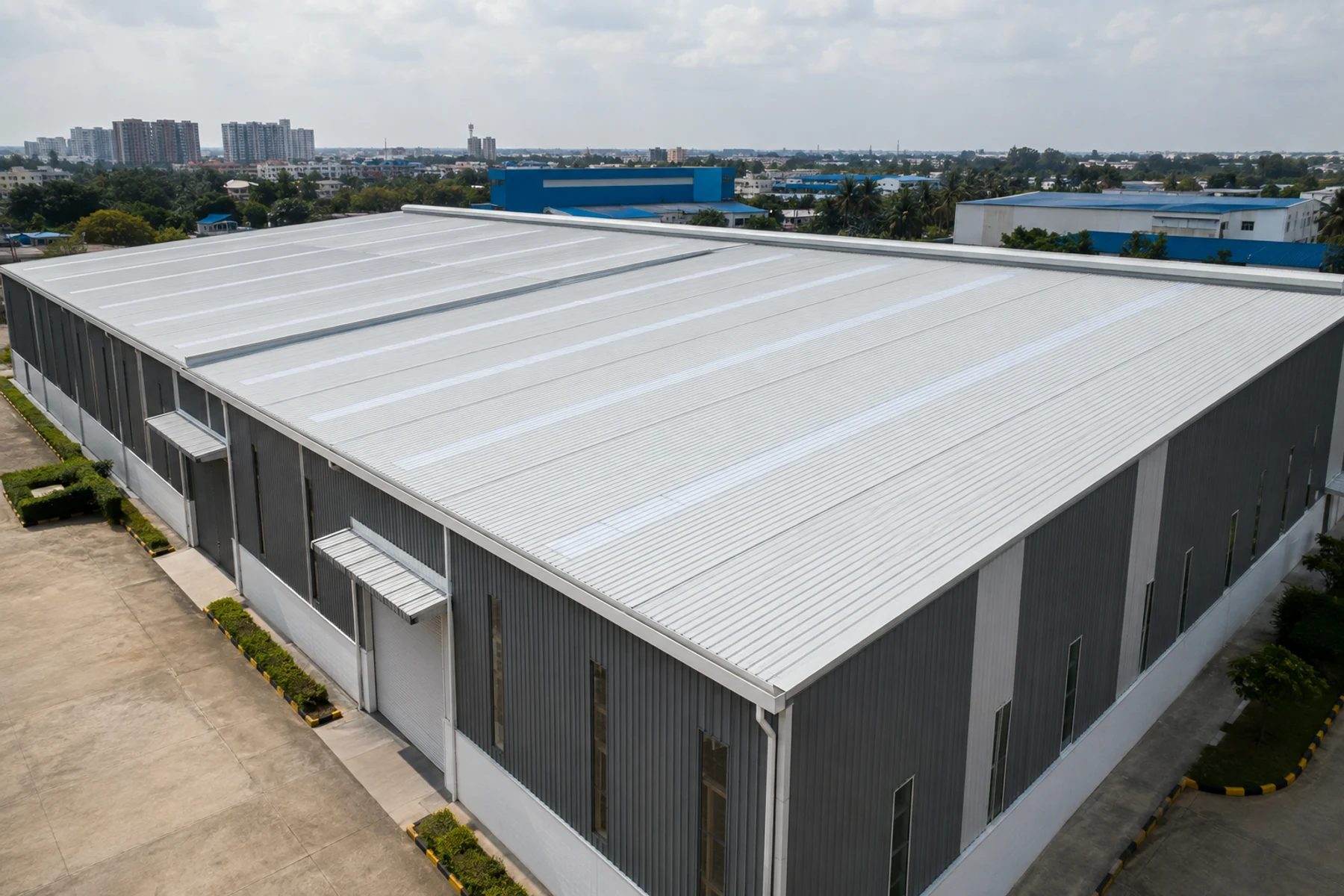
Bulk Roofing Material Procurement: Negotiation Tips for Large Infrastructure Projects
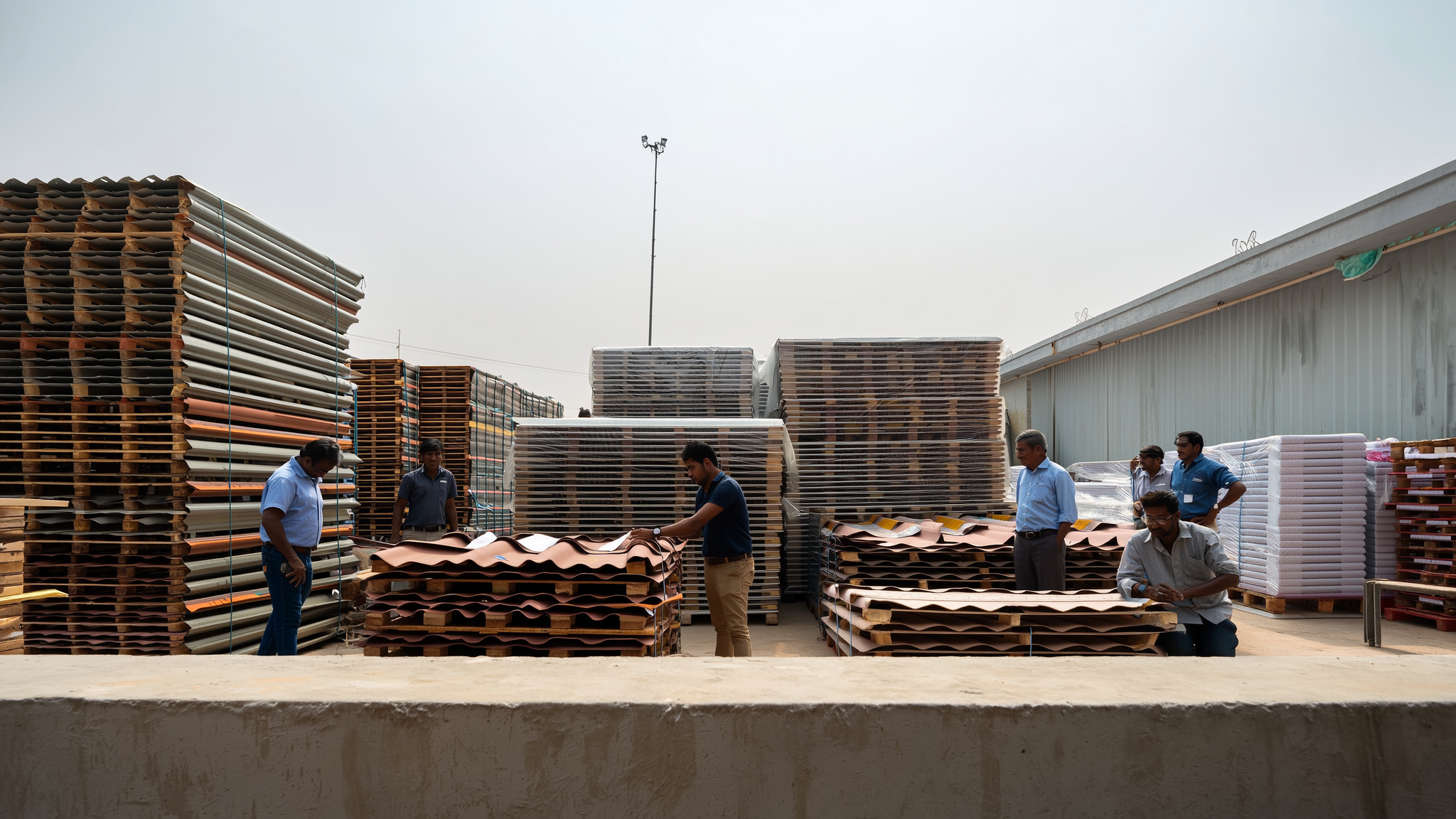
I've reviewed procurement decisions on 30+ large infrastructure projects (₹50+ crores each) across South India, and I can identify exactly where most procurement teams leave money on the table.
The issue isn't complexity – it's systematic under-negotiation of bulk roofing material purchases. Procurement teams follow standard RFQ processes and accept first-round pricing, missing 15-25% savings available through strategic negotiation.
Let me walk through the framework that's generating real savings for large infrastructure projects.
Understanding Bulk Roofing Procurement Economics
Baseline scenario: 50,000 sq meters of roofing material procurement for major infrastructure project
Standard procurement approach: 1. Request for quotes from 3-5 suppliers 2. Select lowest bidder 3. Negotiate minor discounts (2-5%) 4. Accept terms and proceed
Typical result: Material cost ₹90-100 lakhs
Strategic procurement approach: 1. Develop detailed specifications and volume commitment 2. Identify 6-8 potential suppliers 3. Structure multi-stage RFQ with competitive pressure 4. Leverage volume commitment for significant discounts 5. Negotiate extended payment terms and bundled services
Typical result: Material cost ₹75-85 lakhs (25% savings vs. standard approach)
The Negotiation Framework: 5 Strategic Moves
Move 1: Aggregate Volume Across Multiple Phases
Most large projects have phased implementation (Phase 1, 2, 3, etc.). Suppliers typically quote per-phase volume. Strategic procurement combines volume:
Example: - Phase 1 roofing: 15,000 sq meters - Phase 2 roofing: 18,000 sq meters - Phase 3 roofing: 17,000 sq meters - Total: 50,000 sq meters
Standard approach: Quote each phase separately (supplier optimizes pricing for each phase)
Strategic approach: Request total 50,000 sq meters pricing with commitment to all phases
Supplier incentive: Volume certainty allows supplier to optimize manufacturing and logistics
Typical discount: 8-15% on aggregate volume vs. per-phase pricing
Financial impact: ₹10-15 lakh savings on ₹90-100 lakh budget
Move 2: Extended Payment Terms Leverage
Suppliers typically quote with 30-day payment terms. Large infrastructure projects often have 60-90 day payment cycles. This creates negotiation leverage:
Negotiation positioning: "We operate on 60-90 day payment cycles. Can you accommodate?"
Supplier response options: - Accept extended terms (small additional discount) - Offer early-payment discount (if you can pay within 10 days)
Result: Most suppliers will accept 60-90 day terms for large volume (improves your cash flow)
Financial impact: ₹5-10 lakh financing cost savings (improved cash flow management)
Move 3: Vendor Consolidation (Multi-Category Bundling)
Large projects typically require multiple material categories (roofing, flashing, insulation, fasteners, etc.). Most procurement teams source each category separately.
Strategic approach: Bundle roofing + complementary materials with single supplier
Supplier incentive: Consolidated procurement = higher total volume, streamlined logistics
Typical discount: 12-18% on bundled purchases vs. separate sourcing
Financial impact: ₹15-20 lakh savings
Move 4: Competitive Bidding Structure
Rather than traditional "request for quotes," use competitive bidding:
- Invite 6-8 suppliers to bid
- First round: Submit technical proposals + pricing
- Public announcement of top 3 bids
- Second round: Top 3 suppliers invited to improve bids (knowing competitor pricing)
- Final selection based on best technical + financial offer
Why this works: Suppliers increase competitive pressure on each other, resulting in more aggressive pricing
Typical discount vs. standard RFQ: 8-12% lower final pricing
Financial impact: ₹10-15 lakh savings
Move 5: Performance-Based Pricing
Link pricing to supplier performance metrics:
Example: - Base price: ₹180/sq meter - On-time delivery bonus: -₹2/sq meter for each week early, +₹3/sq meter for each week late - Quality standard bonus: -₹1/sq meter for defect rates <0.5%, +₹2/sq meter if defect rates >2%
Supplier incentive: Financial reward for performance quality and speed
Result: Improves supplier accountability without contract penalties
Financial impact: Performance improvement reduces rework costs ₹5-10 lakhs
Detailed Negotiation Playbook
Pre-Negotiation Preparation:
- Define total addressable budget (your maximum acceptable cost)
- Research supplier capacity (who can actually handle volume?)
- Understand supply market (pricing trends, supplier competitive position)
- Identify non-negotiable requirements (specifications, timelines, quality standards)
- Prepare alternatives (what if supplier can't deliver as specified?)
During Negotiation:
- Lead with value, not price ("We're looking for a partnership that combines quality, reliability, and cost optimization")
- Present total volume clearly ("We're commissioning 50,000 sq meters across 3 phases")
- Emphasize relationship ("This project is Phase 1 of a larger infrastructure portfolio")
- Create urgency without desperation ("We need pricing finalized by [date] to proceed with engineering")
- Ask for best pricing ("What's your best possible price point for this volume and timeline?")
Post-Negotiation Lock-In:
- Document all terms clearly (pricing, volume, timeline, quality standards, payment terms)
- Include escalation clauses (what happens if raw material costs change >5%?)
- Define warranty and remediation (what if material doesn't meet specifications?)
- Establish performance metrics (on-time delivery, defect rates, responsiveness)
The Bottom Line for Large Procurement
For infrastructure projects with 50,000+ sq meters of roofing procurement, strategic negotiation can generate 15-25% cost savings. The framework combines volume aggregation, extended payment terms, vendor consolidation, competitive pressure, and performance incentives.
The key: Approach procurement as strategic partnership negotiation, not commodity purchasing.